
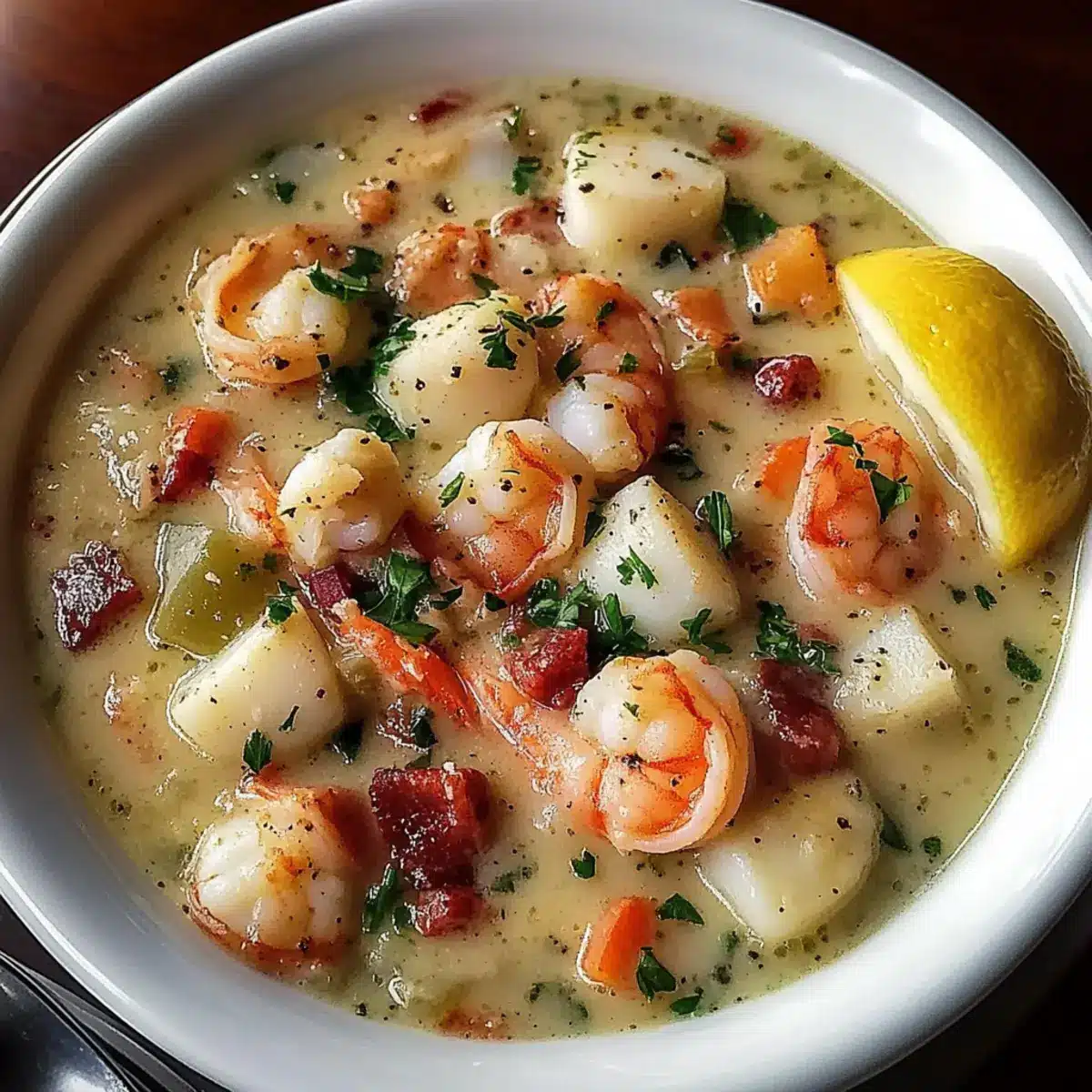
As the autumn breeze whispers promises of cozy evenings, I found myself craving a bowl of something warm and heartening. That’s when I decided to whip up my Nova Scotia Seafood Chowder, a creamy maritime delight that wraps you in its comforting embrace with every spoonful. This recipe beautifully marries tender haddock, succulent shrimp, and delicate scallops in a rich broth, while fragrant thyme and zesty lemon elevate each bite. Not only is this dish a delightful blend of fresh seafood and velvety goodness, but it’s also an approachable, intermediate-level recipe that’s perfect for any home chef ready to impress. Whether you’re gathering friends for a dinner party or simply seeking a comforting meal on a chilly day, this chowder is sure to warm your heart and satisfy your cravings. Are you ready to dive into this delicious coastal creation?
What makes this chowder so special?
Comforting Simplicity: This Nova Scotia Seafood Chowder comes together effortlessly, making it perfect for busy cooks who still crave homemade goodness.
Seafood Extravaganza: Packed with flavorful haddock, shrimp, and scallops, each bite is a taste of the ocean’s bounty, inviting you to savor the freshness.
Creamy Indulgence: The rich, velvety texture sets it apart, ensuring that every spoonful feels like a warm hug on a chilly day.
Versatile Delight: Feel free to customize with herbs or different seafood to fit your taste preferences, making it a dish that never gets old!
Crowd-Pleasing Star: Whether it’s a cozy family dinner or a festive gathering, this chowder is sure to impress and satisfy everyone at your table.
For more cozy recipes, check out my Hearty Chicken Noodle Soup or dive into the flavors of the sea with my Creamy Lobster Bisque.
Nova Scotia Seafood Chowder Ingredients
For the Base
• Unsalted Butter – Adds richness and flavor; can use olive oil for a lighter version.
• Diced Onion – Provides a sweet, aromatic base; shallots can be used for a milder flavor.
• Carrots – Contributes sweetness and color; celery can be a great substitute for a different texture.
• Celery – Adds crunch and freshness; fennel offers a more pronounced anise flavor if desired.
• Minced Garlic – Enhances flavor depth; fresh is best, but dried can work in a pinch.
For the Chowder
• Diced Potato – Forms the chowder’s hearty base; Yukon gold or red potatoes provide different textures.
• Seafood Stock – Infuses the dish with seafood flavor; vegetable stock works for a lighter option.
• Dried Thyme – Adds earthiness; feel free to swap in fresh thyme, adjusting the amount to taste.
• Bay Leaf – Infuses aromatic depth; remember to remove it before serving.
For Creaminess
• Heavy Cream – Provides creaminess and richness; opt for half-and-half for fewer calories.
• Milk – Adjusts consistency and richness; low-fat works if preferred.
For the Seafood
• Haddock – The primary seafood, bringing light flavor; cod or pollock can be substituted if needed.
• Shrimp – Adds sweetness and texture; crab meat or scallops can mix things up.
• Scallops – Provide richness and tenderness; mussels can be a delightful alternative.
For Seasoning
• Salt and Freshly Ground Black Pepper – Essential for flavor balance; season to taste for the perfect finish.
Step‑by‑Step Instructions for Nova Scotia Seafood Chowder
Step 1: Sauté the Aromatics
Begin by melting 4 tablespoons of unsalted butter in a large pot over medium heat. Allow the butter to foam without browning, then add in 1 diced onion, 1 diced carrot, and 1 diced celery stalk. Sauté for 5–7 minutes, stirring frequently until the vegetables soften and become fragrant, creating a lovely base for your Nova Scotia Seafood Chowder.
Step 2: Add the Garlic
Next, stir in 2 cloves of minced garlic, cooking for an additional minute until fragrant. The garlic will enhance the flavor of the chowder, adding depth. Ensure it doesn’t brown, as this could lead to bitterness, which would detract from the dish’s creamy richness.
Step 3: Combine the Potatoes and Stock
Now, incorporate 2 cups of diced potatoes into the pot, followed by 4 cups of seafood stock. Add 1 teaspoon of dried thyme and 1 bay leaf to infuse the chowder with aromatic flavors. Bring the mixture to a gentle simmer and cook for 15–20 minutes until the potatoes are tender and easily pierced with a fork.
Step 4: Stir in the Cream
Once the potatoes are tender, carefully remove the bay leaf from the pot. Lower the heat slightly and stir in 1 cup of heavy cream and 1 cup of milk, ensuring the mixture does not reach a rolling boil. The cream will create that luxurious texture essential for the Nova Scotia Seafood Chowder.
Step 5: Add the Seafood
Gently fold in 1 pound of haddock, 1 cup of shrimp, and 1 cup of scallops into the chowder. Continue to cook for 5–7 minutes, or until the seafood becomes opaque and cooked through, ensuring that it remains tender and juicy. Watch for a perfectly creamy consistency that hugs all the seafood.
Step 6: Season to Taste
Taste the chowder and season with salt and freshly ground black pepper according to your preference. The seasoning is crucial in bringing out the flavors of the tender seafood and creamy broth, allowing the comforting essence of the Nova Scotia Seafood Chowder to shine through.
Step 7: Serve with Garnishes
Ladle the chowder into warm bowls and sprinkle with freshly chopped parsley for a burst of color and freshness. Serve accompanied by lemon wedges, which add a delightful zing to each velvety spoonful, enhancing the overall experience of this delicious, comforting dish.

Nova Scotia Seafood Chowder Variations
Feel free to get creative and personalize this rich chowder to suit your tastes!
-
Dairy-Free: Substitute heavy cream with coconut milk and adjust the seasonings for a dairy-free delight. The coconut will add a subtle sweetness, complementing the seafood beautifully.
-
Herb Boost: Add fresh herbs like dill, chives, or basil right before serving for an aromatic uplift. Not only will they bring vibrant flavors, but they’ll also enhance the chowder’s visual appeal.
-
Spicy Kick: Toss in a pinch of red pepper flakes or chopped jalapeños to spice things up! The heat creates a lovely contrast to the creaminess of the chowder.
-
Sweet Corn: Mix in a cup of sweet corn kernels for an added sweetness and texture. This will bring a pleasant crunch and give your chowder a touch of summer freshness.
-
Smoky Flavor: Incorporate smoked paprika for a depth of flavor. This adds a warm, smoky essence that pairs perfectly with the seafood, enriching each spoonful.
-
Vegetable Medley: Sneak in other vegetables like spinach or bell peppers for an added nutrient boost. These will not only enhance the color of your chowder but also provide extra flavors that complement the seafood.
-
Potato Variations: Use sweet potatoes for a healthier twist. Their natural sweetness and vibrant color will give the chowder a unique flavor profile and a beautiful hue.
-
Seafood Swap: Experiment with different seafood like calamari or clams. These options will add their own textures and flavors, ensuring you experience something new with each version of your chowder.
For more variation inspirations, dive into my delightful Creamy Lobster Bisque or explore a heartwarming bowl of Hearty Chicken Noodle Soup that captures the essence of comfort cooking!
Make Ahead Options
These Nova Scotia Seafood Chowder ingredients are perfect for meal prep enthusiasts! You can chop the vegetables and refrigerate them in an airtight container up to 24 hours in advance, ensuring freshness while saving you time. The curious cook can also prepare the chowder base (steps 1-3) ahead and store it in the fridge for up to 3 days; just add the cream and seafood when you’re ready to serve to maintain the chowder’s comforting quality. When it’s time to enjoy, simply reheat your base gently, then fold in the cream and seafood, cooking until everything is warmed through. You’ll have restaurant-quality results with minimal effort, perfect for busy weeknights!
Expert Tips for Nova Scotia Seafood Chowder
-
Avoid Boiling Cream: To maintain a smooth texture, ensure you do not bring the chowder to a rolling boil after adding the cream.
-
Add Seafood Last: Always fold in the seafood just before serving to prevent overcooking, ensuring tender and juicy pieces throughout the chowder.
-
Adjust Consistency: If your chowder is too thin, simmer it with the lid off to reduce; if too thick, lighten it with a splash of seafood stock or cream.
-
Cool Before Storing: Allow the chowder to cool completely before refrigerating to maintain its quality; gently reheat to preserve the seafood’s tenderness.
-
Enhance with Wine: Adding a splash of dry white wine while simmering the vegetables can elevate the flavor; just remember to let the alcohol cook off before proceeding.
Storage Tips for Nova Scotia Seafood Chowder
Fridge: Store cooled chowder in an airtight container for up to 2 days; this helps maintain its creamy texture and prevents odors.
Freezer: For longer storage, freeze chowder in freezer-safe containers for up to 3 months. However, note that cream may separate upon thawing.
Reheating: Reheat gently on the stove over low heat, stirring occasionally and adding a splash of seafood stock or milk to adjust the consistency if needed.
Serving Freshness: For the best flavor, enjoy your Nova Scotia Seafood Chowder freshly made, but these storage tips ensure you can savor its delightful taste later!
What to Serve with Nova Scotia Seafood Chowder
Gather around the table and complement your chowder with delightful sides that enhance its comforting flavors and textures.
-
Warm Crusty Bread: The perfect vessel for soaking up the rich, creamy broth, crusty bread adds a satisfying crunch to each bite. Enjoy it slathered with butter for an extra touch of indulgence!
-
Fresh Green Salad: A vibrant salad of mixed greens, cherry tomatoes, and a light vinaigrette refreshes the palate and balances the chowder’s creaminess, making each course feel bright and lively.
-
Steamed Asparagus: The slight bitterness of asparagus contrasts beautifully with the chowder, adding a touch of elegance to your meal. Drizzle with lemon for an extra zing that mirrors the chowder’s flavor profile.
-
Roasted Root Vegetables: A medley of sweet carrots, parsnips, and beets brings warmth and earthiness to the table, perfectly complementing the seafood’s flavors while providing a hearty dose of nutrition.
-
Crispy Potato Wedges: For a comforting twist, serve crispy potato wedges seasoned with herbs. Their crunch provides delightful texture alongside the creamy chowder, creating a well-rounded dining experience.
-
Chilled White Wine: Pairing with a chilled Sauvignon Blanc or crisp Pinot Grigio lifts the dish with refreshing acidity while enhancing the seafood flavors.
-
Lemon Sorbet: For dessert, a light and zesty lemon sorbet cleanses the palate and rounds off your meal with a refreshing note, leaving everyone satisfied and uplifted.

Nova Scotia Seafood Chowder Recipe FAQs
What type of seafood is best for this chowder?
Absolutely! Fresh haddock, shrimp, and scallops are ideal for a delicious Nova Scotia Seafood Chowder. If you’re looking for alternatives, cod or pollock can replace haddock, while crab meat or mussels can be delightful substitutes for the shrimp and scallops respectively.
How should I store leftover chowder?
To keep your chowder fresh, allow it to cool completely and store it in an airtight container in the refrigerator for up to 2 days. Make sure to reheat it gently over low heat so the seafood doesn’t overcook.
Can I freeze Nova Scotia Seafood Chowder?
Certainly! You can freeze the chowder in freezer-safe containers for up to 3 months. Keep in mind that the cream may separate when thawed, but you can re-emulsify it by stirring well or adding a bit more cream while reheating.
What if my chowder is too thick?
No worries! If your chowder turns out too thick, simply stir in a little seafood stock or milk while gently reheating it on the stove. This will help achieve that perfect creamy consistency again.
Is this chowder suitable for people with seafood allergies?
It’s important to note that this chowder is not suitable for those with seafood allergies due to the presence of haddock, shrimp, and scallops. If you’re accommodating guests with such allergies, consider preparing a similar creamy soup using vegetable stock and different vegetables instead.
How can I tell if my seafood is fresh?
Fresh seafood should have a clean, ocean-like smell and look moist, not dried out. For fish like haddock, it should be translucent and bright in color. Additionally, when buying shrimp and scallops, choose ones that are firm to the touch and have a slight shine.

Nova Scotia Seafood Chowder: Comfort in Every Creamy Spoonful
Ingredients
Equipment
Method
- Melt unsalted butter in a large pot over medium heat. Add diced onion, carrot, and celery. Sauté for 5–7 minutes until vegetables soften.
- Stir in minced garlic, cooking for an additional minute until fragrant.
- Incorporate diced potatoes and seafood stock. Add dried thyme and bay leaf. Bring to a simmer, cooking for 15–20 minutes until potatoes are tender.
- Remove the bay leaf. Lower heat and stir in heavy cream and milk, ensuring not to boil.
- Fold in haddock, shrimp, and scallops. Cook for 5–7 minutes until seafood is opaque and cooked through.
- Season with salt and freshly ground black pepper to taste.
- Ladle into warm bowls and garnish with parsley and lemon wedges before serving.
Leave a Reply