
As I stirred the vibrant hues of spring into my skillet, the air filled with the tantalizing aroma of fresh vegetables dancing in olive oil. This Creamy Spring Pasta Primavera captures the essence of the season, showcasing tender-crisp asparagus, sweet peas, and juicy cherry tomatoes all enveloped in a rich Parmesan sauce. With its ease of preparation, this dish is the perfect solution for busy weeknight dinners or delightful spring gatherings. Not only does it celebrate the beauty of seasonal produce, but it also offers a customizable experience, allowing you to swap in your favorite vegetables or pasta shapes. Ready to bring a slice of spring to your table? Let’s dive into this delicious recipe together!
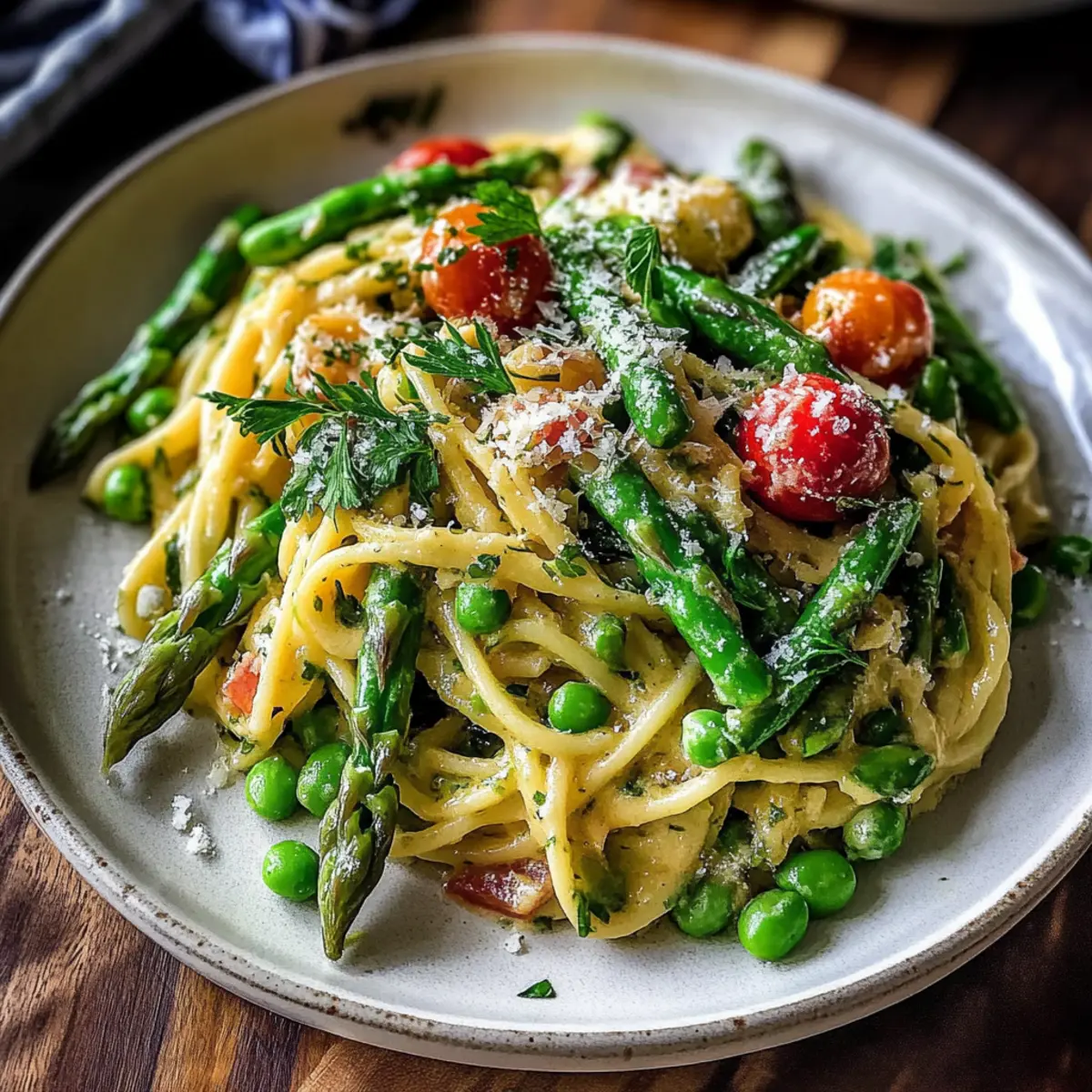
Why is Spring Pasta Primavera a Must-Try?
Delightfully Customizable: This dish offers endless possibilities, allowing you to mix and match your favorite vegetables like bell peppers or carrots.
Seasonal Freshness: Each bite bursts with the vibrant flavors of spring, making it a perfect way to celebrate the season.
Quick & Easy: Ready in just 30 minutes, it’s perfect for busy weeknights when you want something fresh and homemade without the hassle.
Crowd-Pleasing Comfort: The creamy Parmesan sauce is a hit with both adults and kids, making it ideal for family dinners or gatherings.
Healthy & Wholesome: Packed with nutrients from fresh veggies, it balances indulgence with health, making it a great option for those looking to eat moderately healthy. For more delicious ideas, check out these Butter Shrimp Pasta or Savory Homemade Pasta.
Spring Pasta Primavera Ingredients
• Get ready to bring spring to your plate!
For the Pasta
- 12 ounces dry fettuccine or pasta of choice – This forms the hearty base; opt for gluten-free pasta for a gluten-free version.
For the Vegetables
- 2 tablespoons extra-virgin olive oil – Adds flavor and richness; can substitute with avocado oil for a different taste.
- 1 bunch asparagus, trimmed and cut into 1-inch pieces – Provides a delightful crunch; switch with green beans if needed.
- 1 cup snap peas or snow peas – These create a sweet and crisp texture; feel free to use frozen peas in a pinch.
- 1 small zucchini, thinly sliced – Adds a mild touch; yellow squash works beautifully as a substitute.
- 1 cup mushrooms, sliced – For a savory depth; cremini or shiitake mushrooms elevate the flavor further.
- 3 cloves garlic, minced – Brings a wonderful aroma; you can use roasted garlic for a subtler flavor.
- 1 cup cherry tomatoes, halved – Adds freshness and a slight acidity; grape tomatoes can be used as an alternative.
- 1 cup baby spinach – A nutrient-dense addition; kale can replace this for a heartier option.
- 1 cup frozen peas – Provides a touch of sweetness; no need to thaw them before adding.
- Salt and black pepper to taste – Essential for enhancing flavors; adjust as per your preference.
For the Creamy Parmesan Sauce
- 3 tablespoons unsalted butter – Creates a rich base; dairy-free butter offers a great vegan alternative.
- 1 tablespoon all-purpose flour – Essential for thickening the sauce; cornstarch serves as a gluten-free option.
- ½ cup heavy whipping cream – Infuses the dish with creaminess; almond milk mixed with cornstarch can lighten it up.
- ¾ cup milk (2% or whole) – Balances the sauce consistency; use non-dairy milk for a lactose-free version.
- ½ cup grated Parmesan cheese – Adds savory richness; nutritional yeast can substitute for a vegan option.
- 1 tablespoon lemon zest – Brightens flavors; fresh herbs like thyme can be a lovely alternative.
- 3 tablespoons fresh basil, minced – Enhances the freshness of the dish; parsley is a suitable replacement if needed.
Ready to embark on this culinary adventure? This Spring Pasta Primavera will surely transform your dinner table into a vibrant spring garden!
Step‑by‑Step Instructions for Spring Pasta Primavera
Step 1: Cook the Pasta
Begin by bringing a large pot of salted water to a rolling boil over high heat. Add 12 ounces of fettuccine, stirring to prevent sticking. Cook the pasta for about 8-10 minutes, or until al dente. Before draining, reserve ½ cup of the pasta water. Drain your pasta and set it aside while you prepare the sauce and vegetables for the Spring Pasta Primavera.
Step 2: Sauté Vegetables
In a large skillet, heat 2 tablespoons of extra-virgin olive oil over medium-high heat. Once the oil is shimmering, add 1 bunch of trimmed and chopped asparagus, along with 1 cup of snap peas and 1 small sliced zucchini. Sauté the vegetables for about 3-5 minutes until they are tender-crisp, stirring occasionally. The vibrant color will indicate they’ve softened without losing their bite, creating the perfect foundation for the Primavera.
Step 3: Add Aromatics
Stir in 3 cloves of minced garlic, 1 cup of halved cherry tomatoes, 1 cup of baby spinach, and 1 cup of frozen peas into the skillet with the sautéed vegetables. Cook for an additional 2-3 minutes, allowing the spinach to wilt and the tomatoes to soften, releasing their juices. Season the mixture with salt and pepper to taste, then transfer the sautéed vegetables to a plate while you create the creamy sauce.
Step 4: Make the Sauce
In the same skillet, melt 3 tablespoons of unsalted butter over medium heat. Once melted, whisk in 1 tablespoon of all-purpose flour until it turns golden brown, about 1-2 minutes. Gradually pour in ½ cup of heavy whipping cream and ¾ cup of milk, whisking continuously until the sauce thickens, which should take about 3-5 minutes. Remove from heat and stir in ½ cup of grated Parmesan cheese, 1 tablespoon of lemon zest, and 3 tablespoons of minced fresh basil for a burst of flavor.
Step 5: Combine Everything
Add the cooked fettuccine and the sautéed vegetables back into the skillet with the creamy sauce. Gently toss everything together until the pasta and vegetables are well coated in the rich sauce. If the mixture seems too thick, gradually add some reserved pasta water until you reach the desired consistency. This harmony of flavors defines the essence of Spring Pasta Primavera.
Step 6: Taste & Adjust
Before serving, taste your Spring Pasta Primavera and adjust the seasoning as needed by adding more salt, pepper, or more Parmesan cheese to enhance the flavors. Serve immediately, garnished with extra Parmesan and fresh basil for a pop of color and flavor. Enjoy the delightful medley of fresh vegetables and creamy pasta on your dinner table!
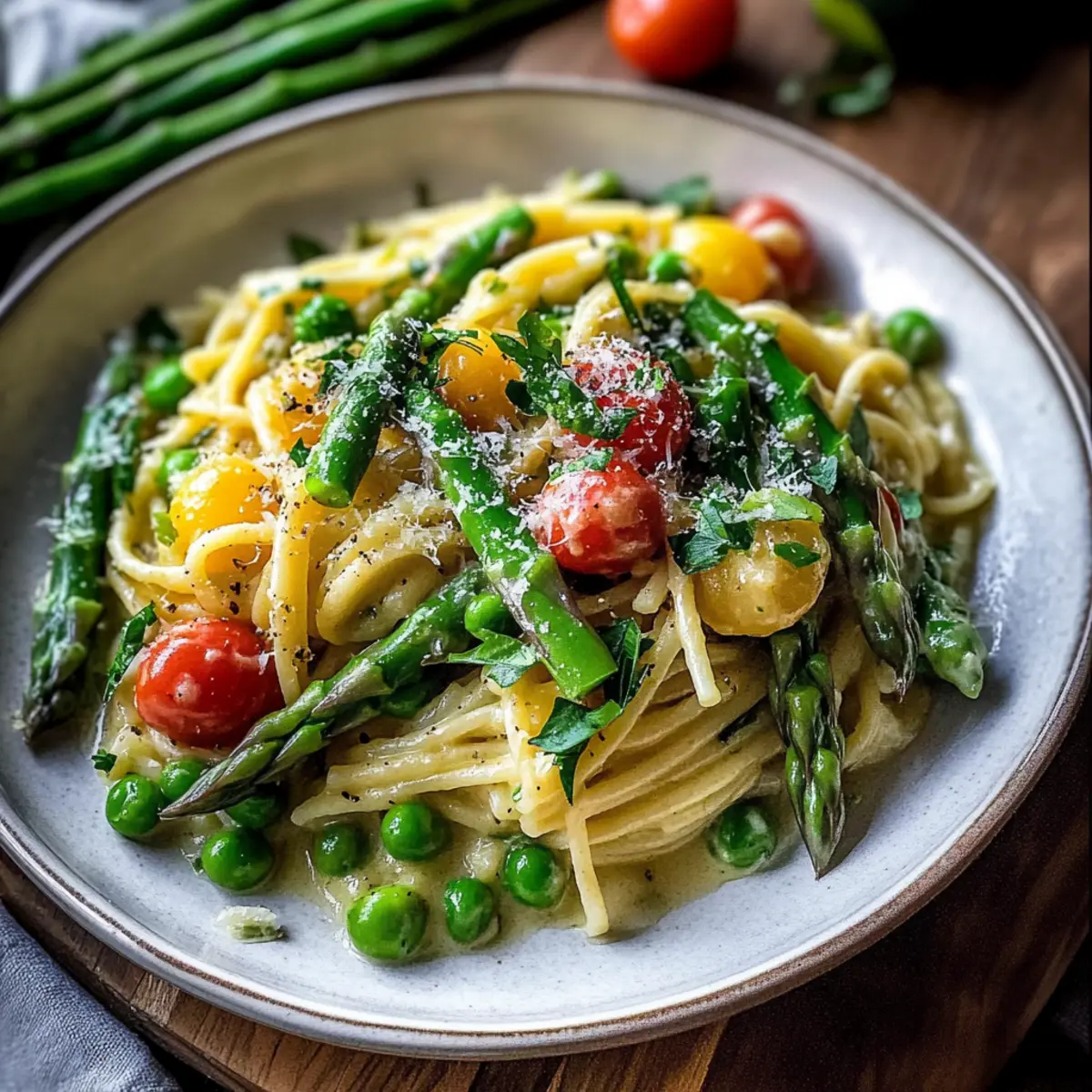
What to Serve with Creamy Spring Pasta Primavera
Enhancing your dining experience can be as simple as pairing your pasta with the right accompaniments for a satisfying meal.
- Garlic Bread: The crunchy, buttery goodness of garlic bread is perfect for mopping up the creamy sauce, making each bite even more enjoyable.
- Mixed Green Salad: A fresh salad with a tangy vinaigrette beautifully contrasts the richness of the pasta and adds a burst of color to your table.
- Roasted Vegetables: Oven-roasted seasonal vegetables enhance the flavors of the dish while providing a delightful textural contrast to the creamy pasta.
- Grilled Chicken: For added protein, juicy grilled chicken tossed on top elevates this dish into a wholesome feast that the whole family will love.
- Lemon Sorbet: To cleanse your palate, serve a light lemon sorbet post-meal; its citrusy zing complements the creamy flavors beautifully.
- Chilled White Wine: Pair with a crisp Sauvignon Blanc or a light Pinot Grigio; the wine’s acidity enhances the freshness of the vegetables and balances the creaminess.
- Parmesan Crisps: These crunchy delights can be served on the side, adding a delightful texture and cheesy flavor to every bite of your creamy primavera.
- Fruit Platter: A refreshing fruit platter provides a light and fruity finish, rounding out your meal with seasonal favorites like strawberries and melons.
How to Store and Freeze Spring Pasta Primavera
Fridge: Store leftover Spring Pasta Primavera in an airtight container for up to 4 days. To maintain the quality, it’s best to keep the sauce separate from the pasta if possible.
Freezer: For longer storage, freeze the Spring Pasta Primavera in a freezer-safe container for up to 3 months. Ensure it is tightly sealed to prevent freezer burn.
Reheating: When you’re ready to enjoy your frozen pasta, thaw it overnight in the refrigerator. Reheat on the stovetop over low heat, adding a splash of milk or reserved pasta water to revive the creamy texture.
Airtight Packaging: Make sure to pack it tightly to prevent air from getting in, ensuring your leftovers stay fresh and delicious.
Expert Tips for Spring Pasta Primavera
- Choose Fresh Veggies: Select seasonal vegetables for the best flavor and nutrition. Fresh asparagus, zucchinis, and tomatoes enhance your Spring Pasta Primavera delightfully.
- Prevent Overcooking: Stir-fry vegetables until they’re tender-crisp to retain their vibrant colors and nutrients; soggy veggies can ruin the dish’s appeal.
- Creamy Sauce Secrets: Whisk the cream into the sauce gradually to avoid lumps—this ensures a smooth and silky coating for your pasta.
- Save Pasta Water: Reserve some pasta water to adjust the sauce’s thickness. It helps create the perfect consistency for your creamy dish!
- Customize to Taste: Don’t hesitate to swap or add vegetables you love. The beauty of Spring Pasta Primavera lies in its versatile and customizable nature.
Make Ahead Options
These Creamy Spring Pasta Primavera components are perfect for meal prep, allowing you to save valuable time during busy weeknights! You can chop and refrigerate your vegetables (like asparagus, zucchini, and cherry tomatoes) up to 3 days in advance. Additionally, the creamy Parmesan sauce can be made ahead and stored in an airtight container in the fridge for up to 2 days. When you’re ready to serve, simply reheat the sauce gently on the stove before mixing in the fresh, cooked pasta and vegetables. This method ensures your dish remains just as delicious, with vibrant flavors that will transport you to spring!
Spring Pasta Primavera Variations & Substitutions
Feel free to get creative with your Spring Pasta Primavera by trying out these delightful variations that enhance flavor and cater to your preferences!
-
Gluten-Free Pasta: Substitute traditional pasta with gluten-free options like brown rice or chickpea pasta for a wholesome alternative. The flavor remains intact, giving everyone a chance to enjoy this dish!
-
Dairy-Free Creaminess: Use a dairy-free butter and almond milk mixed with cornstarch for a creamy vegan sauce. This version ensures that even the dairy-sensitive can enjoy the richness of the pasta.
-
Extra Veggies: Add bell peppers, peas, or even carrots to amp up the nutrition and color. This twist allows you to personalize your Primavera according to your family’s veggie favorites!
-
Zesty Citrus: Swap lemon zest for lime zest to provide a refreshing citrus flare and additional brightness. It’s a lovely way to infuse your dish with an unexpected punch of flavor and zest.
-
Protein Boost: Toss in some cooked chicken, shrimp, or chickpeas for a protein-packed meal. Whether you’re going for meat or plant-based, these options cater to all eating preferences.
-
Herb Infusion: Experiment with different herbs like oregano, dill, or cilantro to add new aromatic dimensions. Fresh herbs can transform your dish into a unique and fragrant experience!
-
Pasta Shape Change: Switch the fettuccine for any pasta shape like bowtie or orecchiette to introduce exciting textures. Each form has its own charm and can turn dinner into a fun adventure!
For more delicious ideas, don’t miss out on my Savory Homemade Pasta or delight the family with Butter Shrimp Pasta. Enjoy customizing your plate!
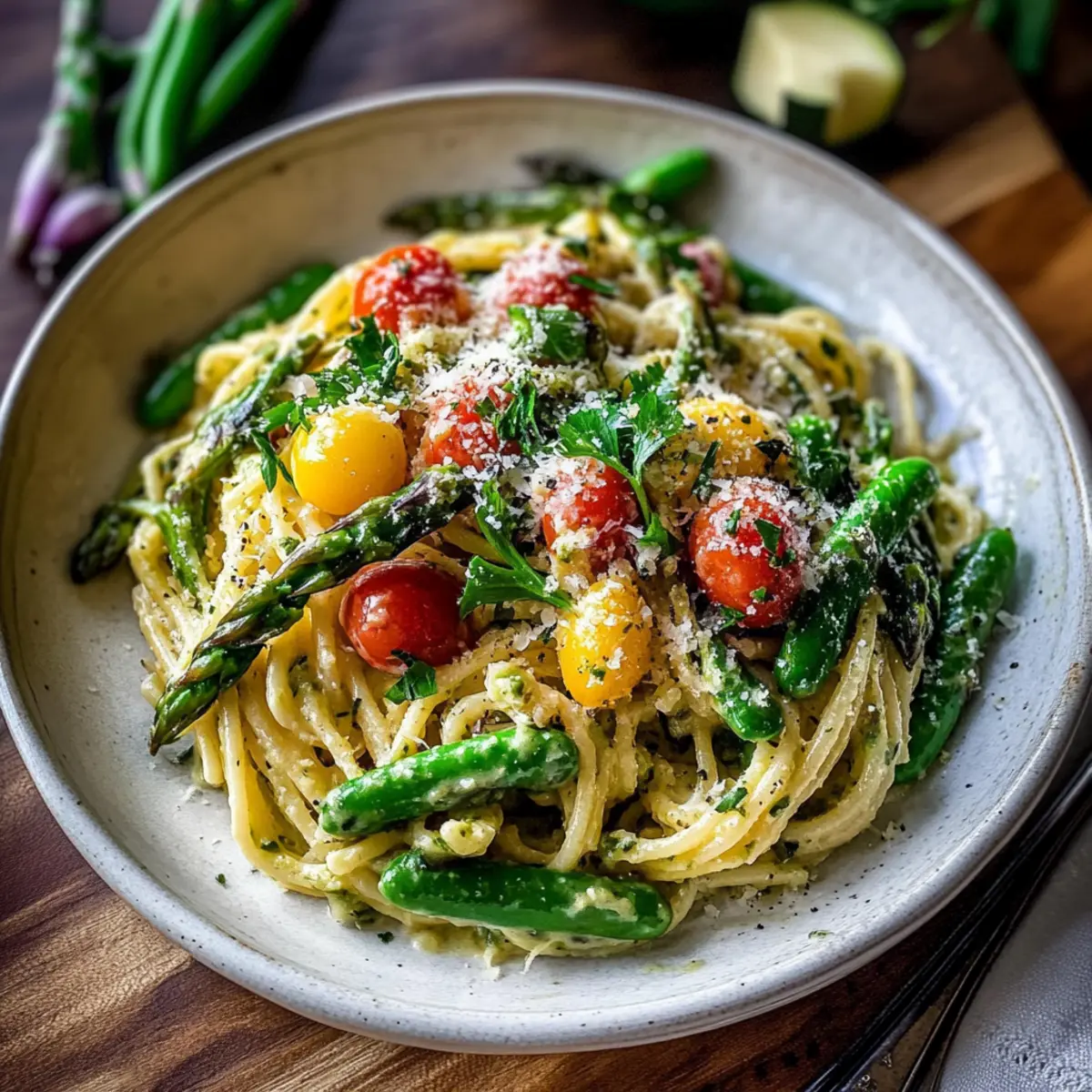
Creamy Spring Pasta Primavera Recipe FAQs
How do I choose ripe vegetables for Spring Pasta Primavera?
Absolutely! When selecting vegetables, look for asparagus that is bright green and firm, with closed tips; zucchini should be glossy and unblemished. For cherry tomatoes, opt for those that are plump and brightly colored, free from dark spots. Fresh snap peas should feel crisp and sweet to the bite. This attention to ripeness ensures your dish bursts with flavor!
How should I store leftover Spring Pasta Primavera?
To store leftover Spring Pasta Primavera, transfer it to an airtight container and keep it in the refrigerator for up to 4 days. If possible, store the vegetables separately from the pasta to maintain their texture. When you’re ready to enjoy, a gentle reheating on the stovetop will keep it delicious!
Can I freeze Spring Pasta Primavera?
Very much! To freeze Spring Pasta Primavera, allow it to cool completely before transferring it to a freezer-safe container. Seal it tightly to prevent freezer burn and store for up to 3 months. To reheat, thaw it overnight in the refrigerator and warm gently on low heat, adding a splash of milk or reserved pasta water to restore its creamy texture.
What if my creamy sauce becomes lumpy?
Don’t worry! If your creamy sauce becomes lumpy, it’s usually due to adding the cream too quickly. To fix it, whisk it vigorously over low heat while gradually adding more milk to smooth out the texture. If it remains stubborn, blending it with an immersion blender can help achieve that silky consistency!
Does Spring Pasta Primavera accommodate dietary restrictions?
Absolutely! This dish is highly customizable. For vegan options, swap the Parmesan cheese for nutritional yeast and use dairy-free cream alternatives. Gluten-free pasta works well, too! Just be mindful of allergies; ensure that the specific vegetables and sauces you use are free of any relevant allergens to keep it safe for everyone at the table.
How can I enhance the flavor of my Spring Pasta Primavera?
For an extra flavor boost, try adding more garlic or incorporating fresh herbs like thyme or oregano. A dash of chili flakes can also introduce a delightful heat. Additionally, a squeeze of lemon juice just before serving can brighten up the flavors even more, making your Creamy Spring Pasta Primavera truly sing!
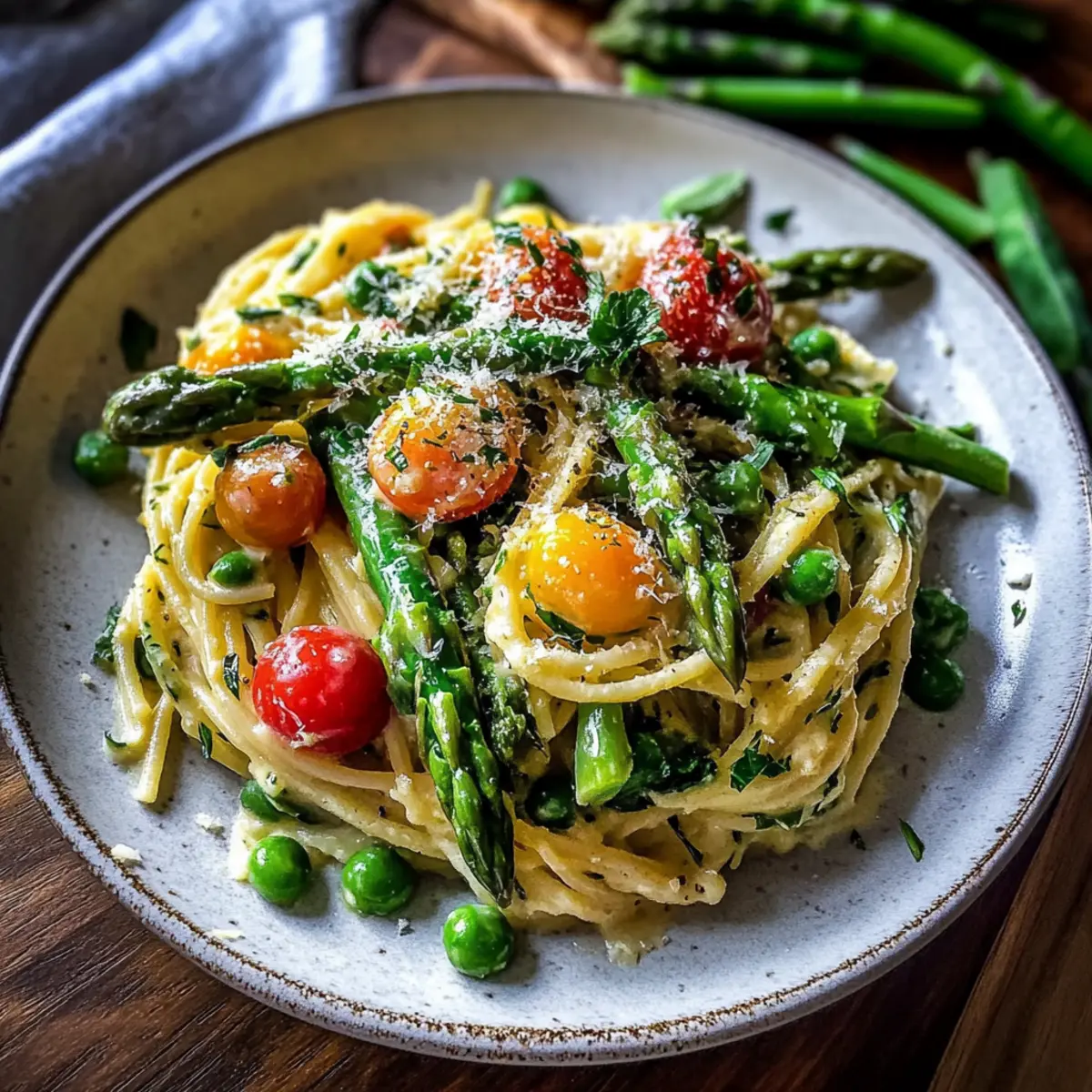
Creamy Spring Pasta Primavera to Brighten Your Dinner Table
Ingredients
Equipment
Method
- Begin by bringing a large pot of salted water to a rolling boil over high heat. Add 12 ounces of fettuccine, stirring to prevent sticking. Cook the pasta for about 8-10 minutes, or until al dente. Before draining, reserve ½ cup of the pasta water. Drain your pasta and set it aside while you prepare the sauce and vegetables.
- In a large skillet, heat 2 tablespoons of extra-virgin olive oil over medium-high heat. Once the oil is shimmering, add 1 bunch of trimmed and chopped asparagus, along with 1 cup of snap peas and 1 small sliced zucchini. Sauté the vegetables for about 3-5 minutes until they are tender-crisp, stirring occasionally.
- Stir in 3 cloves of minced garlic, 1 cup of halved cherry tomatoes, 1 cup of baby spinach, and 1 cup of frozen peas into the skillet with the sautéed vegetables. Cook for an additional 2-3 minutes, allowing the spinach to wilt and the tomatoes to soften. Season the mixture with salt and pepper to taste, then transfer the sautéed vegetables to a plate while you create the creamy sauce.
- In the same skillet, melt 3 tablespoons of unsalted butter over medium heat. Once melted, whisk in 1 tablespoon of all-purpose flour until it turns golden brown, about 1-2 minutes. Gradually pour in ½ cup of heavy whipping cream and ¾ cup of milk, whisking continuously until the sauce thickens, which should take about 3-5 minutes. Remove from heat and stir in ½ cup of grated Parmesan cheese, 1 tablespoon of lemon zest, and 3 tablespoons of minced fresh basil.
- Add the cooked fettuccine and the sautéed vegetables back into the skillet with the creamy sauce. Gently toss everything together until the pasta and vegetables are well coated in the rich sauce. If the mixture seems too thick, gradually add some reserved pasta water until you reach the desired consistency.
- Before serving, taste your Spring Pasta Primavera and adjust the seasoning as needed by adding more salt, pepper, or more Parmesan cheese. Serve immediately, garnished with extra Parmesan and fresh basil.
Leave a Reply