
As I stirred together the rich crimson paste of gochujang with tender slices of beef and perfectly cooked noodles, the enticing aromas filled my kitchen, inviting everyone to gather around. My Spicy Korean Gochujang Beef Noodles are not just a dish; they are a delightful explosion of flavor that perfectly marries sweet, spicy, and savory notes in every bite. This recipe is a go-to for busy weeknights, delivering a satisfying meal in record time while still allowing for personalization—swap the beef for chicken, shrimp, or even tofu, and let your creativity shine! Whether you’re feeding a crowd or enjoying a cozy dinner for one, these noodles promise a soul-warming experience that feels indulgent without the effort of a lengthy prep. Ready to dive into a bowl of irresistible, homemade goodness? Let’s get cooking!
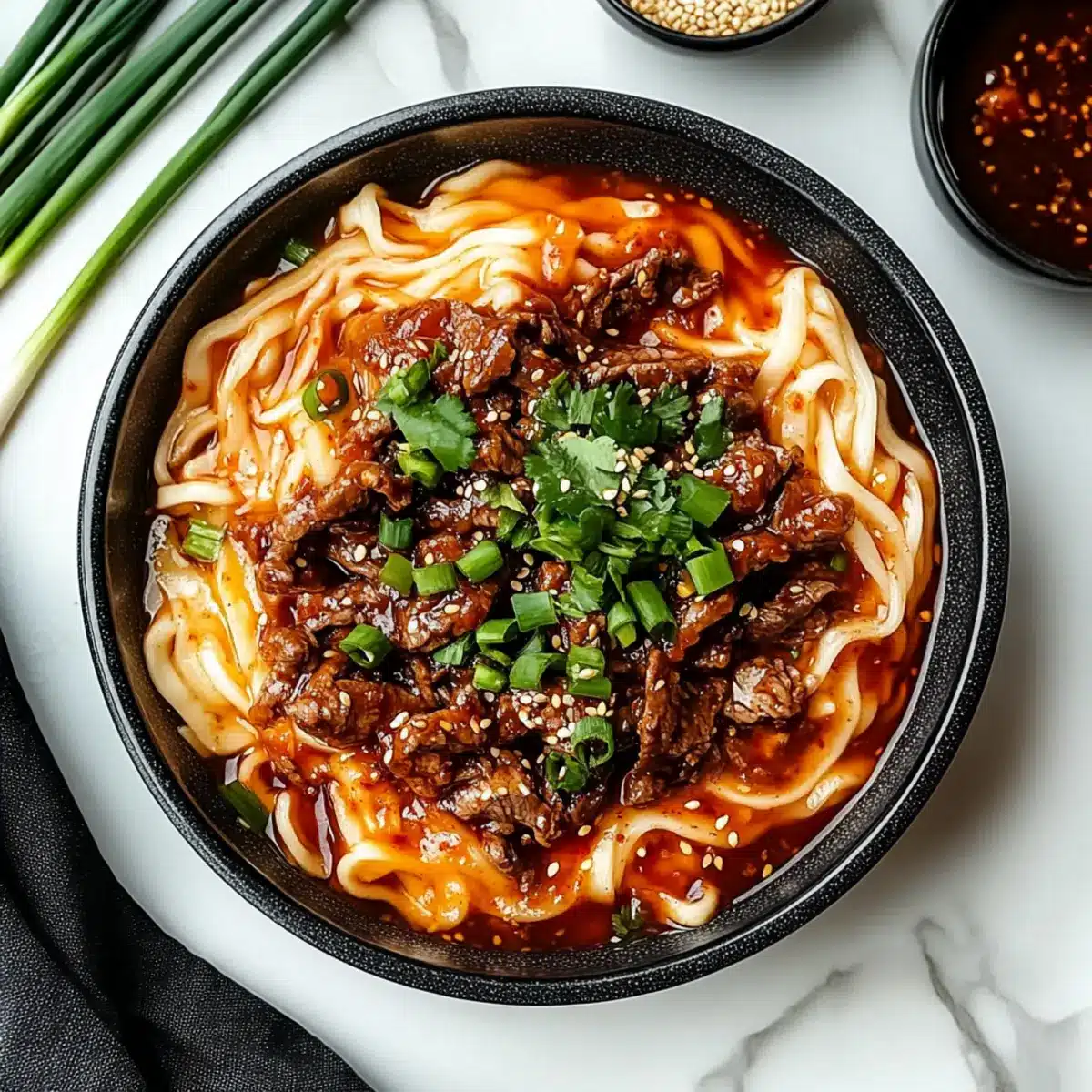
Why Are Gochujang Beef Noodles So Appealing?
Bold Flavors: Dive into a delicious interplay of sweet, spicy, and savory with our gochujang beef noodles that will have your taste buds dancing in delight!
Customizable Options: This recipe is versatile—easily swap beef for chicken, shrimp, or tofu to cater to your tastes.
Quick Preparation: Perfect for busy weeknights, this meal can be on your table in under 30 minutes!
Crowd-Pleaser: Whether entertaining or cooking for yourself, these noodles are sure to impress family and friends alike.
Serve with Style: Elevate your dish by pairing with kimchi or refreshing cucumber salad for a delightful contrast. Enjoy a nourishing bowl that feels special, yet is easy enough for any chef, even on the busiest of nights!
Gochujang Beef Noodles Ingredients
For the Beef
• Beef Sirloin – This key protein provides tenderness and heartiness; it can be swapped with chicken, pork, shrimp, or tofu for a different twist.
For the Sauce
• Gochujang – The Korean chili paste that adds heat and depth; adjust the amount to control the spice level in your gochujang beef noodles.
• Soy Sauce – Brings saltiness and umami; a low-sodium option is perfect for a healthier version.
• Brown Sugar – Balances the spiciness of gochujang; honey or white sugar can be used as substitutes.
• Sesame Oil – Infuses nuttiness into the dish; if unavailable, other oils can be experimented with, but the flavor will differ.
• Rice Vinegar – Adds the right acidity for balance; apple cider vinegar works well in its place.
For the Vegetables
• Garlic – Using fresh, minced garlic will elevate the aromatic qualities of your dish.
• Onion – Choose yellow or red onions for their sweet depth when sautéed.
• Red Bell Pepper – Adds color and mild sweetness; feel free to use other favorites like green bell pepper for variety.
For the Noodles
• Cooked Noodles – The base for your dish, you can choose any noodle type such as rice noodles or spaghetti.
For the Garnish
• Sesame Seeds – Sprinkle for added texture and a nutty flavor enhancement.
• Green Onions – Chopped green onions provide a fresh, vibrant finish to your bowl of noodles.
Enjoy making these delicious Gochujang Beef Noodles with the easy-to-follow ingredients that cater to your taste!
Step‑by‑Step Instructions for Gochujang Beef Noodles
Step 1: Prep Ingredients
Begin by thinly slicing the beef sirloin against the grain for optimal tenderness. Next, chop the garlic, onion, and red bell pepper into bite-sized pieces. Cook your choice of noodles according to the package instructions—aim for al dente. Once prepped, set everything aside to make the cooking process seamless and enjoyable.
Step 2: Cook Beef
In a large skillet, heat 2 tablespoons of vegetable oil over medium-high heat until shimmering. Add the sliced beef to the pan in a single layer, cooking for about 3-4 minutes until browned and caramelized. Stir occasionally to ensure even cooking, then remove the beef from the skillet and set aside, keeping those savory juices in mind for later steps.
Step 3: Sauté Aromatics
In the same skillet, add another splash of oil if needed, then toss in the minced garlic and chopped onion. Sauté for about 2-3 minutes, stirring frequently, until the onions become translucent and fragrant. The kitchen should fill with a delightful aroma at this point. This aromatic base will enhance the flavor of your Gochujang Beef Noodles.
Step 4: Add Vegetables
Next, stir in the red bell pepper slices and sauté for another 3-4 minutes until they are tender but still vibrant. Keep an eye on them, as you want them to maintain a slight crunch. This colorful addition will boost the dish’s visual appeal and add a lovely sweetness that balances the heat of the sauce.
Step 5: Make Sauce
In a separate bowl, combine 3 tablespoons of soy sauce, 1 tablespoon of brown sugar, 2 tablespoons of gochujang, 1 tablespoon of sesame oil, and 1 tablespoon of rice vinegar. Whisk together until smooth; the mixture should have a rich, deep color. This sauce is the heart of your Gochujang Beef Noodles, so feel free to adjust ingredients based on your spice preference.
Step 6: Combine
Pour the sauce mixture into the skillet with the sautéed vegetables, stirring to coat them evenly. Cook for about 2 minutes over medium heat, allowing the flavors to marry and thicken slightly. The sauce should glaze the veggies beautifully, preparing them for a delicious reunion with the beef.
Step 7: Reintroduce Beef
Return the cooked beef to the skillet, mixing it well with the vegetables and sauce. Cook for an additional 1-2 minutes until the beef is heated through. The beef should look glossy and well-coated with the spicy sauce, filling your kitchen with mouthwatering smells that signal a delightful meal is on the way.
Step 8: Toss Noodles
Add the cooked noodles directly into the skillet, gently tossing everything together to ensure the noodles are well coated in the sauce. Continue to cook for another 2-3 minutes to heat through, stirring consistently. This final touch allows the noodles to absorb the rich flavors of the Gochujang Beef, creating a satisfying dish.
Step 9: Garnish & Serve
Once all ingredients are well combined and heated, remove the skillet from the heat. Serve your Gochujang Beef Noodles hot, garnishing generously with sesame seeds and chopped green onions for added texture and freshness. The vibrant colors and enticing aromas will have everyone eager to dig in right away!
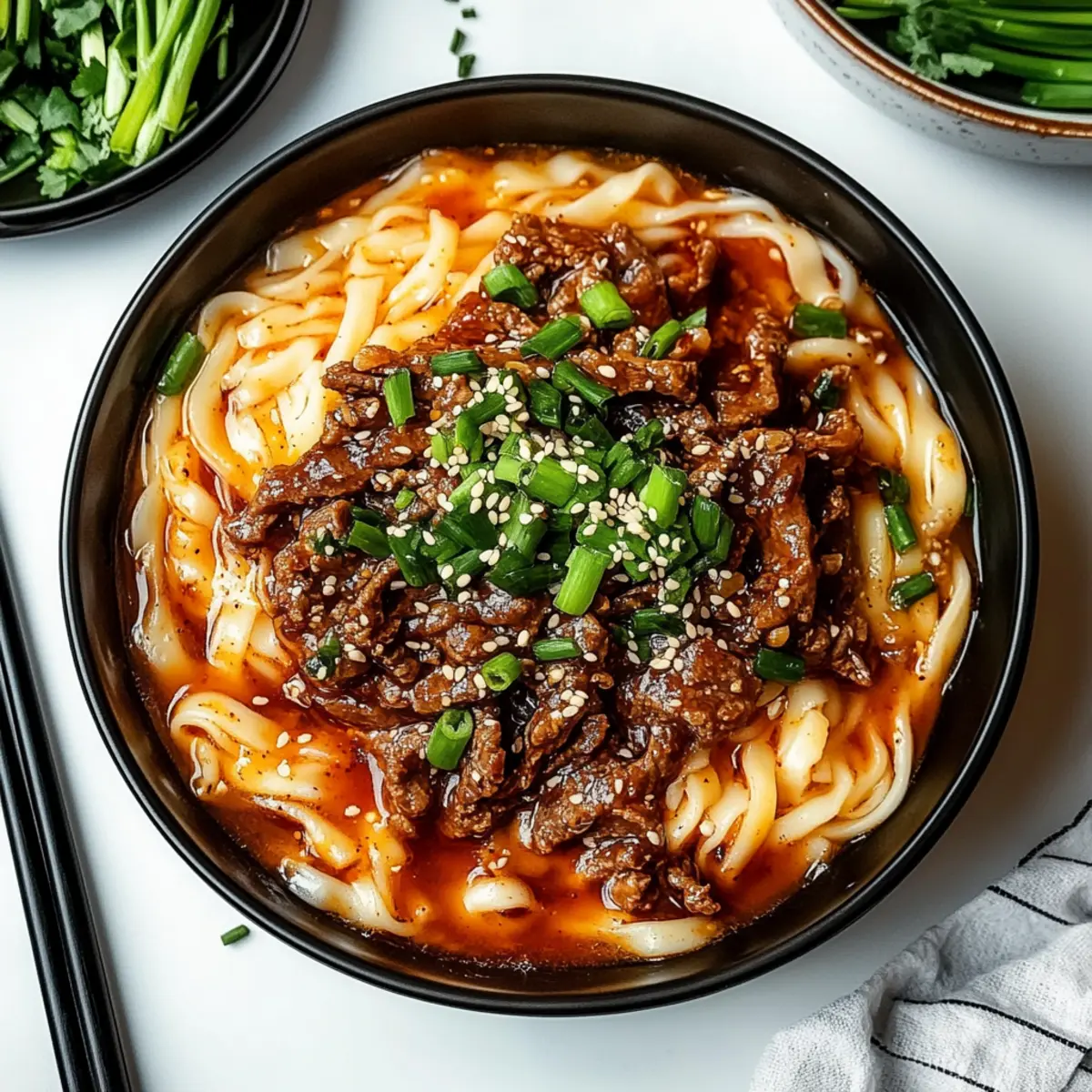
Gochujang Beef Noodles Variations
Customize your dish and let your creativity shine with delightful swaps and enhancements for your Gochujang Beef Noodles!
-
Chicken: Substitute beef with thinly sliced chicken breast for a lighter option that cooks quickly and absorbs flavors beautifully.
-
Shrimp: Use shrimp instead of beef for a seafood twist; add them during the sauté stage for a deliciously quick cook.
-
Tofu: For a plant-based delight, swap the beef for firm tofu, lightly pan-fried for extra texture—perfect for vegan diets.
-
Vegetable Medley: Add more vegetables like carrots, snap peas, or broccoli for an extra crunch and a burst of color. This not only increases nutrition but also makes each bite more exciting!
-
Heat Boost: For those who crave more spice, mix in some sliced fresh chili peppers or a dash of chili flakes when sautéing the veggies. It takes the heat to a whole new level!
-
Noodle Variety: While traditional noodles work wonders, try swapping in soba or udon noodles for a different texture experience. Each option brings its own unique flair to the dish.
-
Bibimbap Style: Turn the dish into a deconstructed bibimbap by serving the spicy beef and noodles alongside roasted vegetables and a fried egg for a satisfying meal.
-
Chilled Noodle Salad: Leftovers? Combine them with fresh veggies and a light sesame dressing for a refreshing cold noodle salad perfect for hot days.
For more inspiration, consider trying out the marvelous flavors of Korean Ground Beef or whip up some delicious Garlic Butter Beef bites to complement your meals!
Make Ahead Options
These Spicy Korean Gochujang Beef Noodles are perfect for meal prep enthusiasts! You can slice the beef and chop the vegetables up to 24 hours in advance, storing them separately in airtight containers in the refrigerator to maintain freshness. Additionally, you can prepare the sauce (soy sauce, gochujang, brown sugar, sesame oil, and rice vinegar) ahead of time; just store it in the fridge for up to 3 days. To finish, simply heat the oil in a skillet, sauté the aromatics, add the prepped veggies and beef, and toss in the already cooked noodles along with the sauce when ready to serve. This way, you’ll enjoy restaurant-quality results with minimal effort, even on the busiest of nights!
Expert Tips for Gochujang Beef Noodles
-
Slice Correctly: Thinly slice the beef against the grain to ensure tenderness. This simple step makes all the difference in texture.
-
Adjust Spice Level: If you’re sensitive to heat, reduce the amount of gochujang and increase brown sugar instead. This will help balance flavors without losing deliciousness.
-
Storage Tip: Cool your cooked noodles before storing leftovers in an airtight container. This prevents the noodles from turning mushy when reheated.
-
Substituting Proteins: Feel free to swap out the beef for chicken, shrimp, or tofu. Each option offers a unique twist on your Gochujang Beef Noodles!
-
Fresh Garnish: Don’t skip the sesame seeds and green onions! They add a wonderful crunch and freshness, elevating the overall dish.
How to Store and Freeze Gochujang Beef Noodles
Fridge: Store in an airtight container for up to 3-4 days. Make sure the noodles have cooled completely to prevent them from becoming mushy.
Freezer: You can freeze Gochujang Beef Noodles for up to 2 months. Portion them into freezer-safe bags and remove excess air for optimal freezing.
Reheating: Thaw overnight in the fridge if frozen. Reheat in a skillet over medium-low heat, adding a splash of water or broth to prevent sticking and ensure even warming.
Leftover Ideas: Use leftover Gochujang Beef Noodles as a filling for wraps or mix into a stir-fry for another delicious meal!
What to Serve with Spicy Korean Gochujang Beef Noodles
Looking to turn your bowl of spicy goodness into a well-rounded meal? These flavorful pairings will elevate your dining experience.
- Kimchi: The fermented crunch and layered heat of kimchi perfectly complement the noodles, balancing heat with tangy freshness.
- Cucumber Salad: A cool, crisp salad tossed in a light vinaigrette adds brightness, helping to cleanse the palate between bites.
- Steamed Bok Choy: Tender yet crunchy, bok choy adds a fresh element to your meal, which pairs beautifully with the rich, spicy flavors of the dish.
- Garlic Breadsticks: Crunchy on the outside and soft on the inside, these lovely breadsticks make for a satisfying contrast to your spicy noodles.
- Sesame Spinach Salad: This vibrant salad with nutty sesame dressing introduces another layer of flavor and texture to balance the dish’s spice.
- Fruit Smoothie: A refreshing fruit blend can help cool the spice and offer a deliciously sweet ending to your meal.
- Asian Beer: An ice-cold Asian lager harmonizes with the dish, its crispness enhancing the bold flavors while quenching your thirst.
- Mochi Ice Cream: For dessert, this delightfully chewy treat offers a harmonious sweet touch, providing a delightful finish after your savory meal.
- Chilled Soba Noodles: Serve as a side to add variety; the cold, nutty flavors of soba enhance the enjoyment of your gochujang beef noodles.
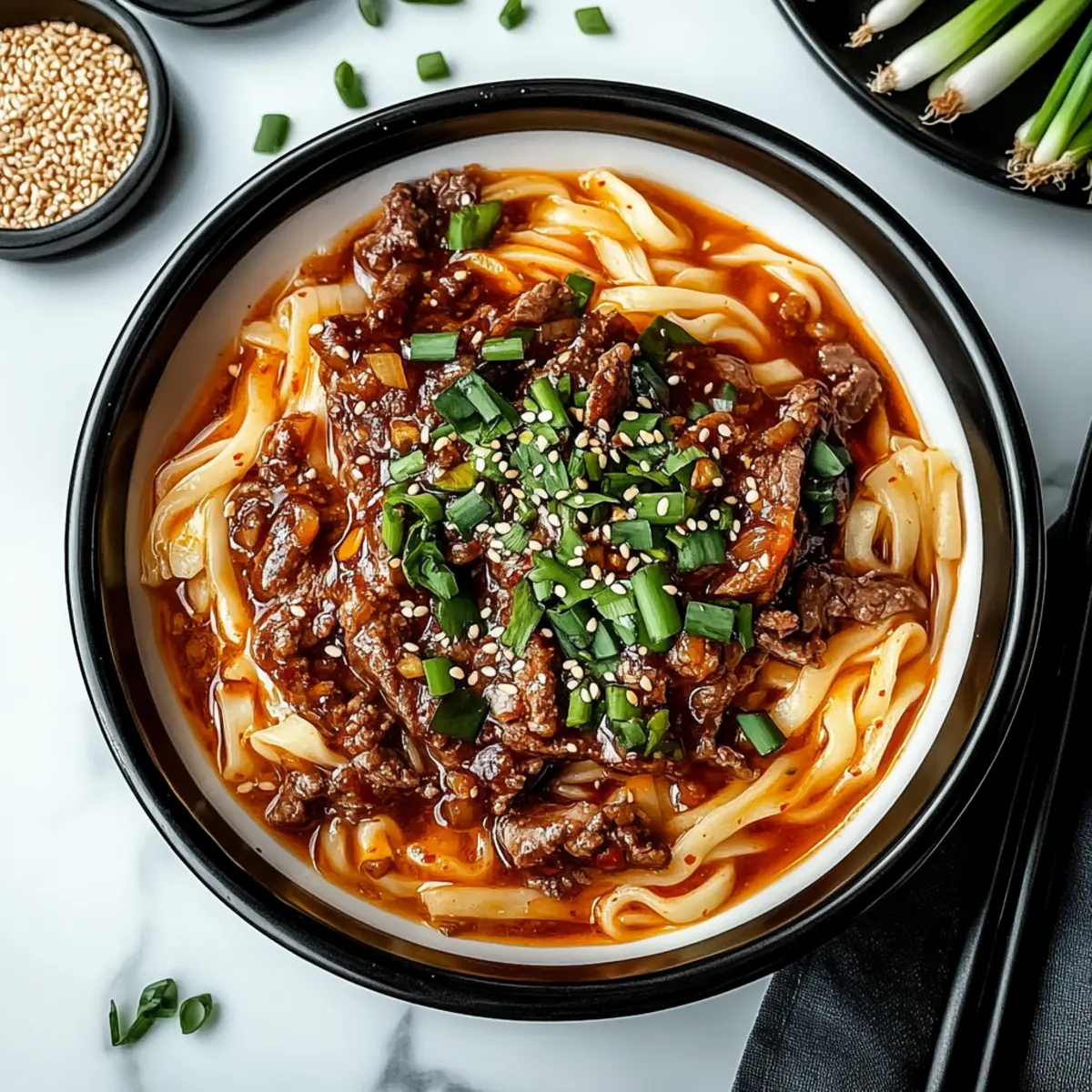
Gochujang Beef Noodles Recipe FAQs
What kind of beef is best for Gochujang Beef Noodles?
Absolutely! Beef sirloin is recommended for its tenderness and flavor. If you need a change, chicken, pork, shrimp, or tofu can be delightful alternatives!
How should I store leftover Gochujang Beef Noodles?
For the best results, store your Gochujang Beef Noodles in an airtight container in the fridge for about 3-4 days. Make sure the noodles cool completely before sealing to prevent them from getting mushy.
Can I freeze Gochujang Beef Noodles?
Yes, you can freeze them! Divide the noodles into portion-sized freezer-safe bags, ensuring to remove excess air. They can last in the freezer for up to 2 months. To reheat, thaw them overnight in the fridge and warm gently in a skillet with a splash of water or broth.
How can I adjust the spice level if I find it too hot?
Very! If you’re sensitive to heat, simply reduce the amount of gochujang you use and increase the brown sugar to balance out the flavors without losing the savory goodness. Start with half the amount and taste before adding more.
Are there any dietary considerations I need to know about?
Definitely! If you have allergies, be cautious with gochujang, soy sauce, and sesame oil as they may contain gluten or allergens. Consider using gluten-free soy sauce and be mindful of substitutions based on dietary restrictions.
What should I do if my noodles become mushy after storage?
If your noodles turn mushy, it’s usually due to excess moisture during storage. To avoid this, allow your cooked noodles to cool to room temperature before sealing them in their container. If they do end up mushy, try tossing them in a skillet with a little oil and fresh vegetables to revive their texture.
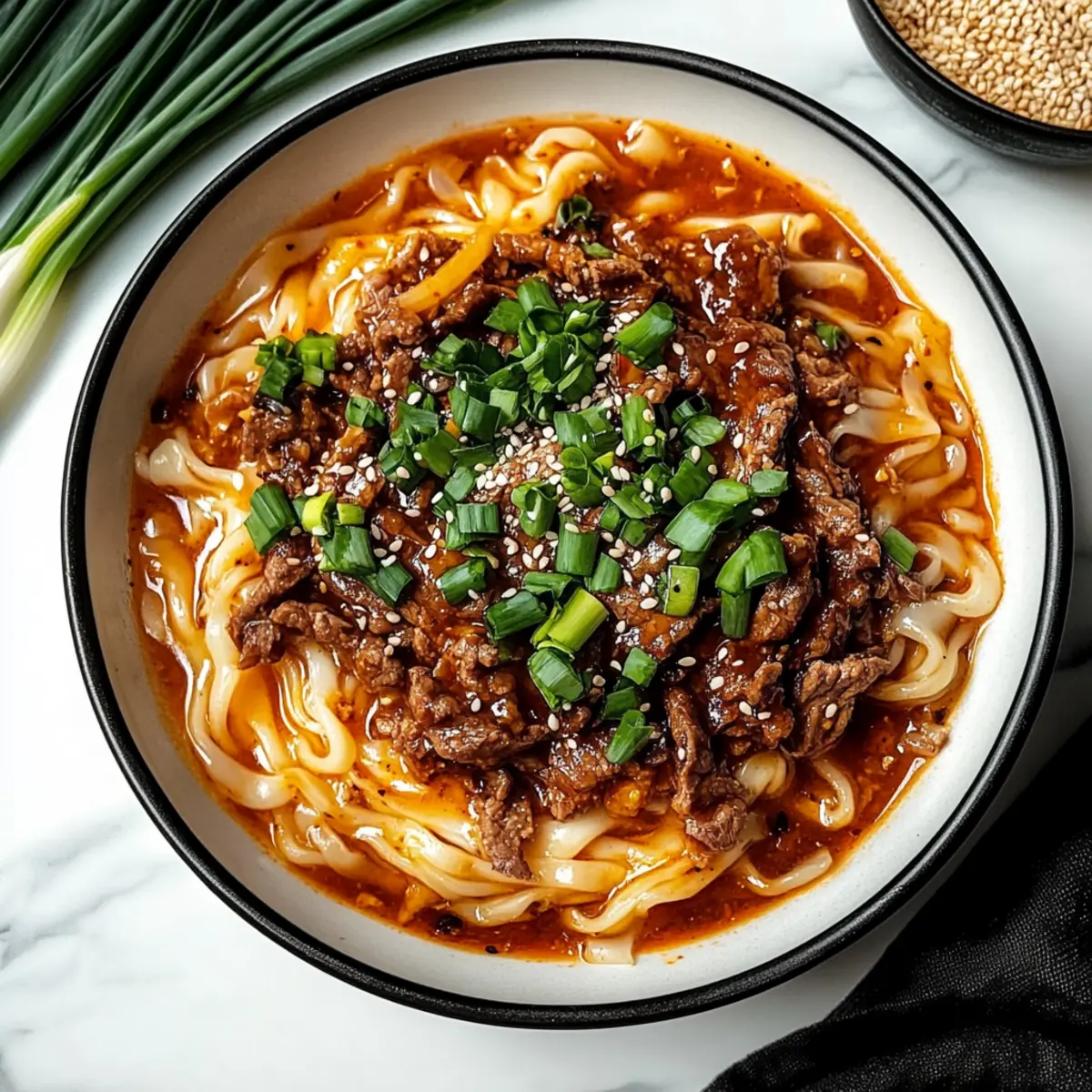
Spicy Gochujang Beef Noodles
Ingredients
Equipment
Method
- Begin by thinly slicing the beef sirloin against the grain for optimal tenderness. Chop the garlic, onion, and red bell pepper into bite-sized pieces. Cook your choice of noodles according to package instructions.
- In a large skillet, heat 2 tablespoons of vegetable oil over medium-high heat until shimmering. Add the sliced beef, cooking for 3-4 minutes until browned, then set aside.
- In the same skillet, add the minced garlic and chopped onion, sauté for 2-3 minutes until onions are translucent.
- Stir in the red bell pepper slices and sauté for 3-4 minutes until tender.
- In a separate bowl, combine soy sauce, brown sugar, gochujang, sesame oil, and rice vinegar. Whisk until smooth.
- Pour the sauce mixture into the skillet, stirring to coat the vegetables evenly, and cook for 2 minutes.
- Return the cooked beef to the skillet, mixing well, and heat for 1-2 minutes until the beef is heated through.
- Add the cooked noodles to the skillet, gently tossing everything together. Cook for 2-3 minutes.
- Remove from heat and serve hot, garnishing with sesame seeds and chopped green onions.
Leave a Reply